Sunday, June 24, 2012

2011 Diva Cup Awards: The Extra Categories

Best Ensemble

Beginners
[Ewan McGregor, Christopher Plummer, Mélanie Laurent, Mary Page Keller, Goran Visnjic]


Bridesmaids
[Kristen Wiig, Maya Rudolph, Rose Byrne, Chris O'Dowd, Melissa McCarthy, Wendi McLendon-Covey, Ellie Kemper, Jill Clayburgh, Jon Hamm]


Win Win
[Paul Giamatti, Amy Ryan, Alex Shaffer, Bobby Cannavale, Jeffrey Tambor, Burt Young, Melanie Lynskey]


X-Men: First Class
[Michael Fassbender, James McAvoy, Jennifer Lawrence, Kevin Bacon, Rose Byrne, Nicholas Hoult, Zoe Kravitz, January Jones, Caleb Landry Jones, Edi Gathegi]


Young Adult
[Charlize Theron, Patton Oswalt, Patrick Wilson, Elizabeth Reaser, Collette Wolfe, Jill Eikenberry, Richard Bekins]


As good as these nominees are, none of them hold a candle to the ladies of Bridesmaids.

Best Scene
Abduction: Dr. Bennett's Plan
The Artist: Peppy's Dance
Bridesmaids: The Engagement Party Toast(s)
Bridesmaids: Wedding Shower Meltdown
Drive: Motel Massacre
Young Adult: Mavis' New Life

Whether they provoked laughter, unintentional (Abduction) or not (Bridesmaids), perfectly encapsulated the tiny joys of cinema (The Artist), raised the stakes of their film (Drive) or dared to defy genre conventions (Young Adult), these six nominees practically summed up 2011 for me. How could I narrow them down any further? While both Bridesmaids scenes managed the near impossible task of developing character and the dramatic undertones of the entire film amidst hilarious-beyond-belief comedic set pieces, Young Adult's controversial ending dared us to root on an awful character who didn't change for the better and is probably in the same place she was at the beginning of the film. In a film that opened with a wide release, that takes some massive balls, my friend.

Best Quote/Line Reading

Abduction: "There'll be time for you to emotionally deal with all this, but right now you've got to get your shit together."

Bridesmaids: "Help me, I'm poor."

Bridesmaids: "I swear to God that dolphin looked, not at me, but into my soul. Into my Goddamn soul, Annie."

Midnight in Paris: "I hear the songs he writes, and I realize I'll never write a real lyric and my talent really lies in drinking."

Scream 4: "Don't fuck with the original."

Was there a more relatable line in 2011 than Annie's drunken, pity-seeking admission?

Breakthrough Performance


Bérénice Bejo, The Artist
☆Jessica Chastain, The Help
Charlie Day, Horrible Bosses
Jasper Newell, We Need to Talk About Kevin
Elizabeth Olsen, Martha Marcy May Marlene

An admittedly difficult choice between Bejo and Chastain, both of whom brought vast amounts of charm, energy and pizazz to their films with the effortless ease of the best old school movie stars. Chastain wins out mainly because she saves her film from near unwatchability, but I can't wait for what both of these ladies come up with for their next offerings.

Best Diva


 Rose Byrne, Bridesmaids
Cameron Diaz, Bad Teacher
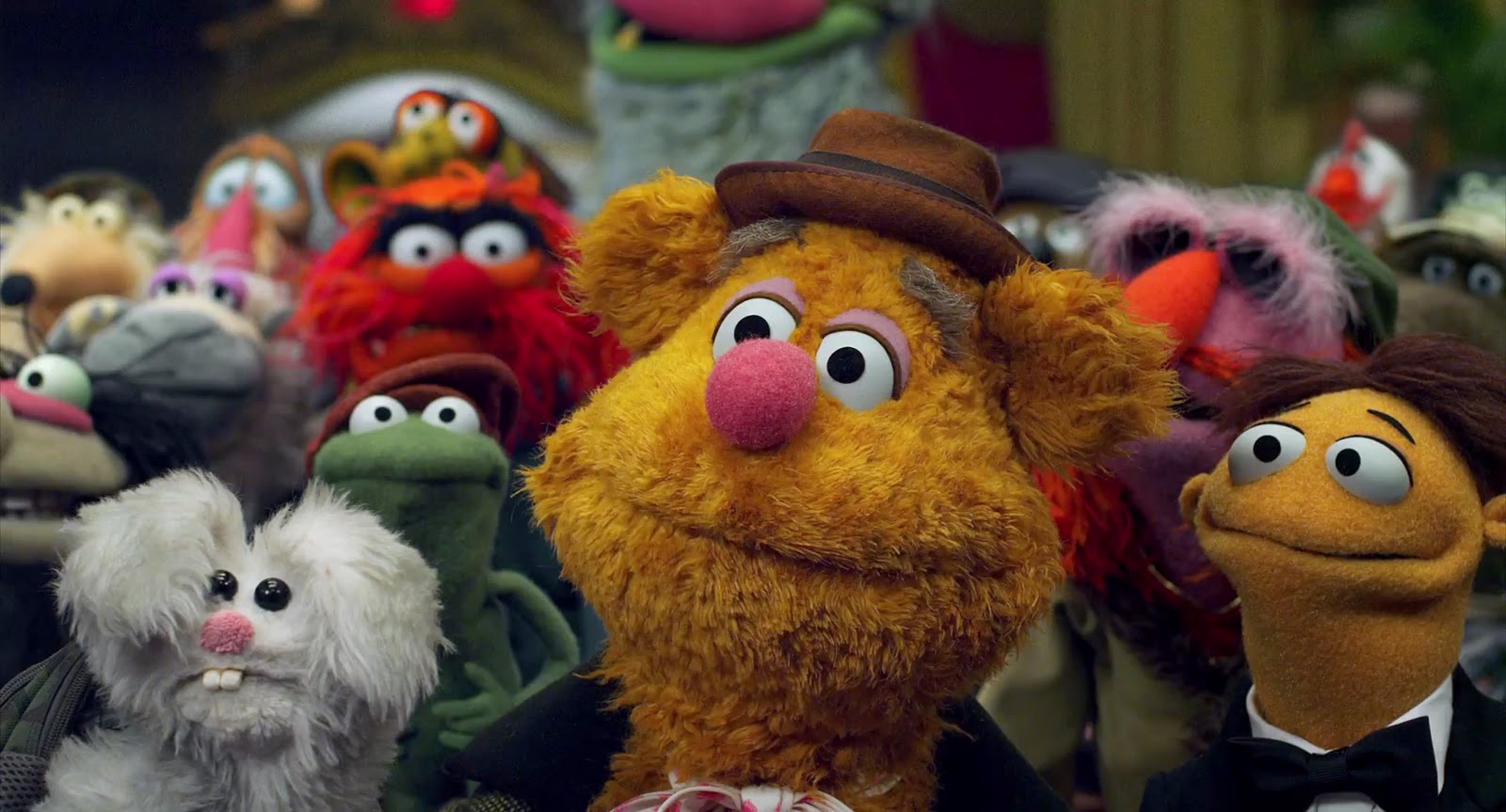
Miss Piggy, The Muppets
Allison Pill, Midnight in Paris
☆Charlize Theron, Young Adult

As if anyone could compete with Charlize's eye-rolling, Diet-Coke-swilling, man-stealing Mavis Gary in this category. The bitch was the diva from head to toe.

Best Sexpot

Henry Cavill, Immortals

Dominic Cooper, The Devil's Double

☆Michael Fassbender, Jane Eyre, ShameX-Men: First Class

Eva Green, Cracks

Christina Hendricks, Drive

Cavill and Cooper did their best to compete but come on. For the second year in a row, in three films as completely different from each other as possible, Fassy came out swinging (his massive penis). The Argentina outfit from X-Men: First Class and his bedclothes during the fire scene in Jane Eyre weren't overtly sexual, yet nearly had me succumbing to the vapors.

Best Cameo/Limited Performance

Jill Clayburgh, Bridesmaids

Tom Hiddelston & Allison Pill, Midnight in Paris

 ☆Jennifer Lawrence, Like Crazy

Corey Stoll, Midnight in Paris

Like Crazy was absolute bollocks, but Jennifer Lawrence made the whole thing bearable whenever she graced the screen (and Anton Yelchin's life) with her presence. The fact that she got dumped for Felicity bloody Jones still makes me LOL, months after watching the film.

Best Poster

Cold Weather
Drive
The Girl With the Dragon Tattoo
Shame
The Skin I Live In

The Girl With the Dragon Tattoo would probably win this if its promotional campaign to make the lame Swedish version edgy and controversial had been transferred into the actual film. That said, the poster for Drive, with its retro look and flashy neon colors, was easily the most memorable of the year.

Tuesday, June 12, 2012

Crazy 80's Project: Withnail and I


Two out of work actors, one a hopeless alcoholic, the other neurotic, both fed up with their squalid apartment, decide to spend a weekend in the country at the alcoholic's gay uncle's cottage. Chaos ensues as they deal with a lack of food, their lack of survival instincts and a surprise visit from the uncle himself. Withnail and I sounds like a "me" movie if ever I've heard one (Alcoholism? Check. Characters failing at life? Check. Clifford from Spice World? Check.). So why am I having the hardest time coming up with anything remotely interesting to say about this movie? Certainly, Withnail and I is clever in its own way, with quite a few amusing bits and a great turn from Richard E. Grant as the alcoholic actor. But everything in the film sort of runs together and nothing truly stands out. It has only been a week since watching Withnail and I, and I can barely remember anything about it. Maybe it's because the film is, in a sense, a comedic take on the British Miserablism film, which I find to be one of the hardest regional cinema subgenres to sit through. For all the banter and gags, Withnail and Marwood are living are extremely desperate, depressing characters sleepwalking through life; it certainly makes Bridesmaids' Annie looks like a winner in comparison.. Perhaps Withnail and I is another one of those films that requires multiple viewings to truly get what is special and funny about it. For now, it's a mildly enthusiastic B-.

Saturday, June 2, 2012

The Top 10 Films of 2011

When you're a film critic, you try to be as objective as possible when reviewing movies. But sometimes circumstances prevent you from being 100% objective. Maybe you're cranky and irate from work, or maybe you're tired and in no mood for the latest existential masterpiece from a third-world auteur. While looking over the films of last year, it was immediately clear that the ones I responded to the most where the ones that reflected my life in 2011. Nothing that happened to me during those 12 months was especially profound nor was it anything that millions of post-graduates trying to find themselves in the land of adults after four years of playing house weren't going through as well. That is, however, where my mind was at for most of the year, and it's definitely reflected in the upcoming list: in at least half of my top 10--debatably even more--you'll find characters stuck in a rut, blindly repeating the same, terrible life choices, hoping that something, anything will change and they will finally be happy again. Reading that sentence over as I write it, maybe I wasn't objective enough with this list. But, even so, I can safely admit that watching these movies helped me. Yes, my life is still messy. No, I don't know what I want to do with the rest of my life. For a couple hours at a time, though, these movies, in their own peculiar ways, showed me that everything will eventually work itself out and I'll be okay. In short: objectivity, be damned! Now, on with the top 10 films of 2011:


10. Warrior
The rare film where I came for the beefcake but stayed for practically everything else, Warrior surprised me in multiple ways. I was surprised by Warrior's ability to ring every drop of pathos and melodrama out of the most tired clichés imaginable. I was surprised that my interest was not only sustained throughout its excessive 140 minute runtime, but after pausing it in the middle to grab a drink with friends, I cut out early so I could come back home and finish the movie. Yes, I know that last sentence is hard to believe but you heard me correctly: I declined more alcohol for Warrior. Most people will scoff at this choice, and under different circumstances I couldn't exactly blame them. But Warrior deserves massive recognition for turning what could have been extreme crap in less capable hands into the best familial melodrama of the year.


09. Scream 4
"Don't fuck with the original," Sidney, the ever-battered heroine of Wes Craven's Scream series, spouts at this installment's crazed killer. It's a lesson Hollywood has problems with, especially when it comes to horror franchises. One successful film and immediately sequels and spin-offs are planned to cash-in on the brand's recognition. Scream is no stranger to this formula, particularly since the film was under the guise of Harvey Weinstein. Yet Scream has somehow always been able to overcome the typical problems of multiple sequels. Whereas the original parodied the horror genre, the second and third films, in their own ways, became parodies of the original, further extending the brand into an interesting and original direction. More than a decade after the last film, Scream 4 revisits the original's intention: parodying the horror genre, which had undergone numerous changes in the past 11 years. The technology may be better and the teens may be more self-aware, but that doesn't prevent Scream 4 from staying true to its original intentions in new surroundings.


08. Certified Copy
Iranian filmmaker Abbas Kiarostami teams up with French living legend Juliette Binoche for this cerebral take on the romance film. Binoche meets writer William Shimell at a lecture where he's discussing his latest book, a critical analysis on the artistic worth of "certified copies" of art masterpieces. She invites him to coffee to discuss, and what begins as a normal conversation involves into something more, something which may or may not reveal their true pasts and relationship with each other. What sets Certified Copy apart from other "thesis as film" excursions into pretension are that the questions it raises--Which of the scenarios is the "original" and which are the certified copies? Does it truly matter, even if we enjoyed a copy more than the original?--are original and probing and that Kiarostami actually wants us to care about these characters as people, rather than intellectual mouth pieces.


07. Senna
Piecing together a documentary out of hours of stock footage from a decade of racing events is one thing. But piecing together a documentary out of hours of stock footage from a decade of racing events so that it flows like a narrative film and manages to be as exciting and suspenseful as the best sports dramas is another thing all together. Director Asif Kapadia works wonders with the limitations, crafting an intense look at how Brazilian outsider Ayrton Senna, met with contempt and outright derision from European Formula One racers and even the organization's president, became one of the sport's most beloved figures. As with Warrior, it probably sounds trite on paper, but the storytelling and technical work involved makes Senna a can't miss movie.


06. The Muppets
Other than a passing knowledge of them through the Muppet Babies cartoon when I was a kid, I had no real earth shattering connection to the Muppets when I went to see their much ballyhooed return to the big screen. So, while most people were disappointed that the Muppets were mostly business as usual with no "new" ideas in their comedy, I found myself marveling at the many clashing Muppet personalities, somehow working together and against each other to stage a grand comeback. What struck me most about the film, and is probably the reason I responded so strongly to the movie, was the melancholy buried deep beneath the boundless optimism of the Muppets. In a way, The Muppets is a film about a group of people whose life didn't turn out exactly as they planned: they lost touch, drifted their own ways, settled into their sad existences but never really examined if they were happy with what they were doing. Is it any wonder why this movie moved me so much, particularly during this past year?


05. Drive
Instantly iconic, effortlessly cool, stylized within an inch of its life and guided by a star-making performance from Ryan Gosling, Drive is a monstrosity of a movie (in the best way possible). It's so BIG, particularly during the final half, it makes every other 2011 film look small; how does any film dare compete with the Scorpion Jacket or the vivid, retro-feeling soundtrack floating over the film? Drive is one of the best pure moviegoing experiences of the year. From a nearly wordless protagonist to its increasingly out-of-time dream (?) sequences bookended with pure, harsh reality, Nicolas Winding Refn's joyfully plays with audiences expectations at how an action film should look. The entirety of Drive feels breezy and carefree, but it's always the easiest-looking films that have the most thought put behind them.


04. Hanna
If I was a blurb whore, I would call Hanna the best action film since Speed and leave it at that. But since I'm not, I'll offer a bit more explanation as to why I loved this movie so much. Joe Wright, known primarily for period pieces, proves that (a) he can do more than period and (b) you can meld arthouse visual flourishes with the action genre's sensibilities for a hybrid that is both unique and fascinating to watch. From the pounding, memorable Chemical Brothers score, to the long take Eric Bana fight scene, to the chase sequence on top of those stock yard crates, every bit of Hanna has been completely thought out and executed flawlessly. If all action films were this intelligent and well-made, I'd be a bigger fan of the genre.


03. Young Adult
When I saw Young Adult on a Friday afternoon in mid-December, I left the theatre feeling like I had just been punched in the stomach. What was that movie? I didn't hate it, not by any stretch of the imagination. Rather, I couldn't quite shake the cold, dark pit it had left in the bottom of my soul. I walked around the mall near the theatre, shopping for Christmas presents, and I wondered how Mavis Gary (Charlize Theron) would react to all of the nonsense going around. I imagined the sneer, the look of contempt she would give these lowly shoppers, spending their sad, pathetic lives in this sad, pathetic mall. Without even realizing it, Mavis had invaded my soul, and that's what bothered me so much about the movie. Even though we are disgusted by the stupid, selfish vanity and egotism Mavis Gary represents, all of us can relate to her at least on some level. From small things to keeping up the appearance of popularity by continuously texting nonsense into your phone or sleeping with someone even though you find everything they say and feel to be utterly contemptible to something bigger like the inability to find happiness in anything, let alone the small things the people around you can and do with relative ease, Young Adult manages the tricky task of finding the reprehensible relatable. The controversial ending to Diablo Cody's masterclass of a screenplay sticks a sharp dagger into the cold, dead soul of this movie--and feels all the more alive because of it.


02. Beginners
If Young Adult was like a punch to the gut, Beginners was like pulling out a nose hair: I was in an incredible amount of (emotional) pain, and I suppressed the urge to cry for no specific reason. A lot of people compliment writers/directors on caring about their characters, but none of them can touch the amount of empathy writer/director Mike Mills feels for every single character on-screen as they find the courage to begin their lives again after setbacks or life-changing moments. Some find it easier than others, yet they all soldier on even when they want to throw the towel in. Beginners is masterful in its ability to find warmth even in the face of death, whether it's of a relationship or a literal one. It's these little glimpses of humor and life in the darker moments which make them all the more affecting and heartbreaking. A perfect mix of light and dark, Beginners is one of the best melancholic comedies you're ever likely to see.


01. Bridesmaids
It's 2012, yet comedy is still treated like a second-class art form. "Sure, Bridesmaids was funny," you'll hear pretentious arthouse snobs sneer after extolling the artistic virtues of the latest Terence Malick snooze fest, "But it's not a great film." "Oh, fuck off," is my response to these ignorant moviegoers, unwilling to even consider the fact that great doesn't always equal serious. Under the guise of a raucous, foul-mouthed gross-out comedy, Bridesmaids smartly sets itself apart from nearly every other studio-financed comedy out there by exploring serious, even potentially dark, subjects through outlandish, in-your-face, comedic set pieces. While laughing at Annie's (Kristen Wiig) numerous meltdowns, you can't help but see how fucking sad it all is. This is a woman who feels the need to compete a smug, condescending stranger at a wedding party because she's afraid of losing her best friend or who picks a fight with a 13 year old girl and calls her a cunt because she realizes just how shitty her life has become. Even the go-get-'em speech at the end, delivered to Annie by fellow bridesmaid Megan (Academy Award-nominee Melissa McCarthy), doesn't ever feel as corny as it should, delivered with good intentions and conviction by McCarthy but layered with so much comedy you don't realize how beautiful what she says is until much later. Yes, Bridesmaids is "just" a comedy, but no film in 2012--hell, at least the past five years--has opened my eyes more to the many possibilities film has to offer.

Tuesday, May 1, 2012

Short Rants on The Lucky One

I could go into garish, grotesque detail describing every single problem with The Lucky One, which starts with the first frame and doesn't let up for the entire 100 minute runtime. I could tell you about the film's dead-in-the-water dialogue or its sickeningly awful, one-dimensional Bad Guy, who makes every Bad Guy in every Tyler Perry movie look nuanced and carefully characterized, or the complete miscasting of the charismatic, energetic Zac Efron as an introverted, bland Iraq vet who couldn't even convince me that he has flown over Iraq, let alone fought there. Yes, I could do all this, but I am in absolutely no mood to rehash any of this vile, repugnant film. You see, I've sat through many bad films in many years as a cinephile. Some were hilariously bad. Some put me to sleep. Others made me rolls my eyes every five seconds. But never have I hated my life as much as I did when I sat through The Lucky One. Somewhere near the 40 minute mark, I began to question why I go to the movies in the first place. By the end of the film, I could barely contain my anger at this film, not only as a whole film but as a vehicle for my beloved Zac Efron. He has made some questionable choices in the past (New Year's Eve being the most recent), but he is always watchable and, at the very least, you see what drew him to a project. With The Lucky One, I don't understand what he was thinking, other than the obvious box office allure of a Nicholas Sparks project. There's stretching as an actor and then there's taking roles that you are not cut out to play. I know this sounds like I'm being particularly harsh to my Zac, but sometimes it takes a loved one to ask, "What in the fuck are you doing?" In terms of both Zac's career and my affection for him, The Lucky One is comparable to Channing Tatum and Dear John: after two big fat zeros in a row, I'm beginning to question whether or not my obsession is a tad out of control. Hopefully, Zac has a 21 Jump Street up his sleeve to revive my interest in his career and show us something we haven't seen yet. Or, at the very least, a film that doesn't make me want to burn my local cinema to the ground. F

Saturday, April 28, 2012

The Dashing One

Currently, I'm going through one of my sporadic phases where I'm obsessed with watching WWE Raw and Smackdown every single week. The reason I'm watching? While it's always nice to see my boo John Cena, my main obsession of late has been Cody Rhodes. Son of legendary wrestler Dusty Rhodes and brother of the infamous Goldust, Cody is the newest member of this family to emerge in the nepotistic wrestling world. He's a fine wrestler, and he does play the heel (aka bad guy) very well, but I must admit that the main reason I'm obsessed is because of how damn good looking he is. There's a very good reason his nickname is "Dashing" Cody Rhodes. Of course, we can't talk about Cody's attractiveness without mentioning the ridiculously short wrestling trunks he wears on a weekly basis. He certainly has no problem showing us the goods, and God love him for that. Whenever I see him running around in those trunks, all I can think about is how much I want him to throw me against the ropes and pin me, if you know what I mean. Take a look for yourself:


My new goal in life is to become Cody's manager so he can carry me on his shoulder like Randy Savage did with Miss Elizabeth back in the day. I may not be as beautiful as she was, but I can certainly pull off the worried look she made her trademark.

The Dame's 2012 Playlist: Nicki Minaj "Starships"

"I don't like 'Starships' because it doesn't make sense," someone recently complained on my Twitter feed. "Was it ever supposed to make sense?" I counter. The song is an absolute clusterfuck, with its massive RedOne production threatening, at times, to drown out Nicki Minaj's inimitable rapping, the insane, almost nonsensical, chorus combined with the raping of a classic children's tune. But amid all the nuttiness, which is Nicki's forte anyways, something about "Starships" clicks into place. Even more than "Super Bass," it pushes Nicki into the popstar realm she clearly doesn't want to embrace. This is a complete shame, as (a) Nicki views being a "popstar" as being a negative thing and (b) if she wanted to embrace it, she could be the most fascinating popstar around. "Starships" is proof that Nicki knows how to combine her rapping with her singing into something completely original (unlike her Guetta single "Turn Me On," which relies far too much on her singing). No, "Starships were meant to fly," makes absolutely no sense, but I honestly wouldn't have it any other way.

Wednesday, April 18, 2012

The Dame's 2012 Playlist: Avicii "Levels"

Yes, technically, it's a 2011 track. But, like most ignorant Americans, I wasn't even aware of this Avicii track until the "Levels"-sampling, vastly inferior Flo Rida hit "Good Feeling" came out last December. When I did discover it--along with a number of other brilliant Avicii/Tim Berg singles--there was an instant spark. Together, "Levels" and I had a blazing chemistry most romantic comedy pairings could only dream of. And, like every romantic comedy ever, it was a case of opposites attracting. Avicii, with his house music stylings, and I, who normally can barely stomach extended remixes of pop tunes let alone straight house music, shouldn't have gotten along. Yet here I am, singing along with "Levels" despite that 95% of the song is instrumental. We've overcome the odds and proved that we're a match made in heaven, and it's all because of "Levels."

The Dame's 2012 Playlist: Dragonette "Let It Go"

Dragonette has always been a band that I've appreciated far more than I've ever loved. They had a couple of great tracks on their Fixin to Thrill album from 2009. Their collaboration with Martin Solveig, "Hello," was nice the first ten times or so I heard, but it quickly wore out its welcome. So, color me surprised when I fell head over heels with "Let It Go" the minute I heard it. This doesn't happen very often, so I knew that this was not a drill. If someone asked me to describe "Let It Go," I could only use one word: euphoric. I absolutely adore the way that infectious, pulsing beat nearly drowns out every lyric in the song. It's a risky stylistic choice, especially considering that the lyrics aren't even bad by any means (and that the way the lead singer howls "Let it goooooooooooo" is the best part of the song), but it pays off in aces for the group. With one triumphant single, Dragonette has gone from "meh" to a "must listen at all costs"; in other words, there is hope for you still to turn things around, Keri Hilson.

The Dame's 2012 Playlist: Lana Del Rey "Off to the Races"

The main reason I allowed all songs released in 2012, not just the "singles," to be eligible for my year-end list is because of "Off to the Races," a track so good I couldn't disqualify it because some bonehead executive decided not to release it. I will admit that I was initially dismissive of Ms. Del Rey, not completely understanding the hype surrounding "Video Games" and most of the sneak peaks from Born to Die. Actually, I believe my exact words were, "Wake me up when she does a dance track." Despite my reservations, I gave her album a listen when it came out, and, color me surprised, I actually liked a good portion of it. The album's standout, without a doubt, is this five minute magnum opus. From the moment Lana moans that first lyric, "My old man is a bad man," I was enamored. I love the almost sinister vibe the song gives off, which, combined with its already frank sexuality ("He likes to watch me in the glass room, bathroom"), makes for an intriguing pairing. I've mentioned this before, but when I listen to music, I rarely listen to lyrics. Usually, I base my opinions on how the song makes me feel. "Off to the Races" is no different, but the lyrics here add even more texture to a song I already can't get out of my subconscious. Lana Del Rey hasn't given me a dance track like a requested. Instead, she has given me something more than I could have ever hoped for: a living, breathing, unequivocal masterpiece.

Tuesday, April 17, 2012

The Dame's 2012 Playlist: Justin Bieber "Boyfriend"

Even if "Boyfriend" doesn't end up as my favorite song of 2011, it will most certainly be the smartest song. Bieber has somehow managed to find a song that matures his sound and style while continuing to appeal to the kiddies who made him famous in the first place. And if you don't understand how difficult that is, just ask Miley Cyrus, who grew up too quickly on Can't Be Tamed for her teen fans. Yes, the fondue line is still atrocious, but Justin has so much swagger, you barely notice just how bad it is. Perhaps what is most impressive about "Boyfriend" is that it sounds so sexy, like a song you could easily see yourself having sex to at some point in the future, even though it's never extremely explicit or profane. Bieber gets the message across without turning into a Justin Timberlake sex machine. How he does it I'll never know. I'm just glad that the Biebz learned from the mistakes of so many other teen heartthrobs who have fallen once they reached the other side of puberty.

Monday, April 16, 2012

You Need to Practice Backing That Ass Up

When I tweeted a few weeks ago that Juvenile's "Back That Ass Up" was a seminal part of my childhood, I wasn't being facetious. And when I say that every time I think of the song I think of my mother, no, my family wasn't as fucked up as you're probably thinking. I've already spoken numerous times about how TRL ran my life between the ages of 11 and 14. One of the great things about the show was that it introduced me to music that I never would have heard otherwise. An obvious example of this would be "Back That Ass Up," a raunchy rap song that wouldn't have played anywhere near the Top 40 radio stations I listened to. The reason I remember this song, and especially the accompanying music video, so much is because my mother would literally force me to change the channel every time the video came on. Although my mother isn't the biggest fan of rap music--oddly enough, however, R. Kelly's "Ignition (Remix)" is one of her favorite songs ever--she was mainly offended by the video. As you may remember, it featured a fair amount of curvacious women with luscious bottoms shaking what their mama gave them in front of the camera. While it looks like nothing more than a parody of late 90's rap videos today, something about it really irked my mother. Maybe she felt that the women were being exploited, which is a valid response. Either way, I always found it funny that my mother reacted so strongly to something as inconsequential as "Back That Ass Up."

Fast forward twelve or so years. On a whim, I decided to listen to Drake's Take Care, a decision based upon the fact that I loved "Find Your Love" a couple years ago and that I've claimed on many occasions that Drake could get it in anytime he wanted. After listening to the album, I decided that he could still get it in and that I liked the album. It didn't strike me until a day or so later that one of my favorite songs on Take Care, "Practice," sounded strangely familiar. After another listen, it clicked into place: "Practice" samples "Back That Ass Up"! In stark contrast to the original's bluntness, Drake's song uses the infamous chorus as a smooth, sexy come-on. By the end of the song's four minute runtime, I certainly wanted to back my ass up on Drake even more than I had before.

Okay, okay, I hear some grumbling, so I better get this out of the way: "Practice" isn't a completely perfect song. After you get over the initial boner-inducing hotness of it all and you pay attention to the non-Juvenile lyrics, the song loses some of its amazingness. "Practice" is about Drake coming to terms with his girlfriend not being a virgin and how he must rationalize this as her getting some "practice" in for their sexual relationship. Can you say ick? Have straight men not evolved to the point of accepting that girls get horny, too, and that it's completely unrealistic to expect a woman in 2012 to remain a virgin for one man some point in the future while he gets to go out and bang as many chicks as he wants because that's what men do? It's almost enough to hate the song, but then Drake gets back to that chorus and I forget any and all moral misgivings I have about the song. No one ever said I was a great moral crusader.

Now that I've reached the end of this post, I realized that the point of this whole essay was probably to post pictures of Drake. Ah, such is life. At least you all get a reward for reading this damn thing!


Friday, April 6, 2012

Violence & The Hunger Games


From the moment the advertising campaign for The Hunger Games kicked into high gear, a lot of questions were raised about the film's central conceit of children murdering other children for sport. How would the film handle it? Would they embrace the violence or sanitize it completely? Just how much could they show and still get a PG-13 rating? Surprisingly, The Hunger Games handles this delicate balance between genuine suspense tastelessness gracefully. In the process, it becomes a commentary on the role of violence in contemporary cinema. No, it's not the most thorough, nor is it the most insightful investigation we have seen. But it's probably the best we were ever going to be given in a PG-13 studio-produced blockbuster aimed at both teens and adults. Besides, this is the film our blood-thirsty culture needs to see and reflect on right now.

Our culture's obsession with violence, particularly in the media, has been discussed ad nauseum since the Columbine shooting over a decade ago. We have no problem letting teens watch people gleefully kill one another in endless action films or sadistic "torture porn" horror films (Show a woman receiving oral, however, and suddenly we must think of the children and protect them). The Hunger Games is one of the few recent mainstream films I can recall where we are forced to stop and think about the violence going on. The first image we see of kid-on-kid violence doesn't occur until about 30 minutes into the film, after only hearing about it up until then. The Hunger Games commentators are showing clips from previous years, explaining how the game works. At the very end, they pause on this photo of a kid holding a brick, standing over another kid with blood coming out of his head. I laughed at first but quickly understood what I was watching was not funny. Instead, I was uncomfortable. The image only appears for a couple seconds, but I'm sick to my stomach thinking of it now. The context it's presented in passes the moment off as an ordinary moment, just an instance of one kid bringing glory to his district by winning the Games. But it's clearly not what the filmmakers want us to come away with. They are asking us to think about how anyone could not only condone this but actively participate in it every single year, looking forward to it like a six-year-old child looks forward to Christmas.

When the film gets to the actual Hunger Games, the violence becomes even more confrontational. Most of the murders take place off-screen or are obscured by rapid editing and blurry camerawork. The ones we do see, however, are just as uncomfortable to watch as that first image. We don't celebrate any of the deaths or wish for more gore as we would in a typical action film or, at least, one that starred adults; what we see is enough, thank you very much. Even when one of the contestants is killed by another to save Katniss, we don't cheer on her demise. The gleeful, psychotic monologue she delivers as she has Katniss in her clutches makes it easier to watch her death, sure. But we're only relieved that Katniss is okay, not that one of the villains is dead. Her death is just another sad consequence of this game and this culture.


When people do die, it's often presented in a surprisingly unsentimental way. There is no excessive outpouring of emotion, just the bare minimum needed to get through the scene. While watching The Hunger Games, I was reminded of Grave of the Fireflies' presentation of death: a scary reality of this harsh, unpredictable world the protagonists are thrown into. The lack of sentimentality makes the film sadder, but it also makes the deaths scarier and more realistic. Rue's (relatively) quiet death forces us to ponder the violence much more than if there was an emotional buffer to distract us. We have to question how anyone could allow such a thing could happen to such a little girl because there's nothing else to think about.

The Hunger Games makes no definitive statement on violence on cinema. To do this, the film would have needed someone like Michael Haneke to confront us openly and directly with these murderous children instead of hiding behind a blurry camera. What The Hunger Games does, though, is start the conversation by directly addressing the very same audience who goes to see these gratuitously violent films. I'm not saying it will change the world, but maybe The Hunger Games will get some people to start questioning why they enjoy watching people mutilate and kill other people at the cinema.

Thursday, March 29, 2012

Britney's Videography: "Do Somethin'"

Britney Spears "Do Somethin'" # # # # #

Released during those dark years that I stopped following Britney's career, this was my first time watching her "Do Somethin'" video, the final single released from her first greatest hits collection. Expecting the worst, I was pleasantly surprised by this video. It's nothing groundbreaking by any stretch of the imagination, but it's cute and fun and sometimes that's all you need. What struck me the most about this clip was the fact that this was Britney's tribute to (maybe even a parody of?) the stereotypical hip-hop video from around this time period. There's Britney and her crew in her gas-guzzling (pink, of course) Hummer, showing off her bling and throwing cash around like it's nothing. When she finally steps up into the club, everything around her literally stops as she becomes the focus of all the club-goers. There's even a scene where Britney sits in her throne and her crew pushes her through the club like the Queen that she is! Whatever she is attempting to pay tribute to, the video comes off as genuine Britney, something only she could pull off. It's no classic, nor is it something I'm likely to watch again anytime soon, but it was a pleasant way to spend three and a half minutes.

Rants on The Girl With the Dragon Tattoo (2011)


What sets David Fincher's version of the Swedish bestseller The Girl With the Dragon Tattoo apart from the original adaptation (and, I'm guessing, the book itself) is the punk rock spirit that drove the marketing campaign and provides the foundation for the film itself. It's certainly an interesting way to set the film apart from one of the few foreign language films in the past decade average movie-going Americans actually saw. The problem is that it's an inappropriate choice for this film. What Fincher is attempting to do is bury Dragon Tattoo under so much style and edginess that you forget that what he is actually trying to sell is a conservative, middling, over-long mystery that, apart from a couple of sodomy scenes, would have been tame 40 years ago. I give him (some) credit for trying to turn this turd into something, but, in the end, it's like putting lipstick on a pig: no amount of stylization is going to make up for the deficiencies of the story or the fact that I've had more fun at family gatherings, cramped with 14 other people in a single-wide trailer, then I had watching this movie. It's the first of many failures in this attempt at making this dog of a story cool.

My main gripe with the film, even before I saw it, was the fact that it has a nearly three hour runtime. I saw the original on a whim and detested it, one of my main complaints being that it was far too long. Surely, I thought, Fincher or someone on the team will realize this and cut something, anything from this story. Nope. In fact, it's even a little longer than the Swedish version. How is it even possible to need 160 minutes to tell this story? The problem is that both films cater far too much to the Lisbeth character. I understand that she's supposed to be this edgy, instantly iconic, teetering-on-the-edge-of-sanity firecracker, but did we really need a whole hour to introduce her character? I got it after a couple of scenes, thank you very much.

The bloated adaptation is actually very indicative of a major problem in Hollywood today. When fans of a huge bestseller, particularly one that's part of a series, go to see its inevitable movie adaptation, they don't want to see an adaptation that works the best for the film medium. Oh no, they want to see the entire damn book on the screen, length or narrative sense be damned! This ideology is what ruined the Twilight franchise (I know I said it's like putting lipstick on a pig, but they could be mildly enjoyable if someone had said no to Stephenie Meyer along the way) and makes the Harry Potter movies incomprehensible to anyone who hasn't read the book beforehand (never has the phrase "Oh, that made more sense in the book" been used more freely and treated as if it isn't a problem then with the Harry Potter franchise). Dragon Tattoo suffers the same fate and not only because of its coma-inducing length. One of the big criticisms thrown at the film was that it was still set in Sweden even though everyone speaks English and no one seems particularly interested in attempting an accent. While it was a silly choice, I understand why everyone was hesitant to change the setting. The fanboy uproar that this film takes place on an island not off Sweden but Maine and that Mikael Blomkvist's name had been changed to Michael Bloom would have been much larger than the tiny dissent that arose from keeping it the same. "How dare you change our beloved novel!" they would have protested. "How dare you hold these books captive so that we can't get adequate, film-appropriate adaptations from them!" I respond.


As I mentioned earlier, the character of Lisbeth Salander, with her severe haircut, tattoos, clothes and lack of social skills, is meant to be instantly iconic. Noomi Rapace, the original Lisbeth, went on and on about how difficult it was adjusting back to her normal self after living with Lisbeth "insanity" for the duration of the Swedish trilogy. Rooney Mara earned raves and an Oscar nomination for "transforming" herself into such a "dark", "disturbed" character. While neither of these actresses were "terrible" in any sense of the word, I'm still not clear on where all of these adjectives showed up in their respective performances. In Mara's case, we learn everything about the character a couple of scenes, just from the way she is dressed and the way she interacts with people. Mara doesn't add anything to Lisbeth to make her appear as dangerous as she allegedly is. Aside from one notorious revenge scene, Mara's Lisbeth comes off more as a bored, bratty teenager who lacks the proper manners to thank those who have helped her or make basic conversation with others rather than the anti-social psychopath she is supposed to be. Just like the film, Mara is all style with very little substance. You can try to put black lipstick on her, but it's like putting...well, you know where I'm going with this. C-

Monday, March 26, 2012

100 Hot Men and a Dame: #84 Gregory Peck

 84. Gregory Peck
Occupation: Actor
Nationality: American
Peak of Hotness: The mid-1940's through the early 1950's.
Best Known For: Playing (and winning an Oscar for it) everyone's favorite, idealistic father Atticus Finch in To Kill a Mockingbird.

Another day, another hot man. This time I'm flying solo discussing this hot piece of Golden Age ass. An underrated one, no doubt, but a hot piece nonetheless.


Like many people, my first encounter with Gregory Peck was in To Kill a Mockingbird. I saw this film in my ninth grade English after, what else, reading the book (to "enrich  the experience," I'm sure). My cinephilia was still in its infancy at this point, so although I knew about the film, I had never encountered Gregory before. I don't want to say that this is where I first fell in love because a) that seems so completely inappropriate given Mockingbird's content, legacy and Peck's character and b) the film, appropriately, de-emphasizes Peck's sexuality. What I will say about Peck in Mockingbird, however, is that he certainly made an impression on me and didn't exactly dissuade me from seeking out any of his other work.

Looking back now, I guess the moment I fell for Gregory was in the film Roman Holiday. It has been far too long since I've seen it, but I was totally enamored with that movie--especially by the idea of a tall, gorgeous, deep-voiced man whisking me away on a whirlwind tour of Rome. I mean, who could say no to that prospect? More than Mockingbird, Roman Holiday plays up his sexuality, or, at the very least, the sense that Peck is a man who enjoys and desires the company of beautiful women. Gregory's not the typical romantic comedy lead: he reads a bit "serious actor slumming it in a light movie" and he's certainly not a Cary Grant. Against all odds, though, Roman Holiday works for him, finding a charm and attractiveness not seen in many of his other films.

I hate to keep talking about Peck's sexuality, because, for the most part, he wasn't a sex symbol in the same way someone like Clark Gable was. Even in his early films like Spellbound, The Valley of Decision or Gentleman's Agreement where his prettiness was at its absolute peak, Peck was sold as a thinking man's sex symbol, never as a sexual object of lust (Duel in the Sun excepted). Sure, he usually got the girl in the end like nearly every male lead during the Golden Age, but sex was never the first thing on his mind. There's no doubt that Gregory liked to get down in the bedroom. You can rest assured, though, that he wasn't going to kiss and tell with his dumb friends. He was a gentleman in every sense of the word.

With his persona firmly in place, I want to talk more about two performances of Peck's from 1945, his breakthrough year in Hollywood. The first, The Keys of the Kingdom, I only want to mention because he plays a priest and, as you will see, this is a recurring motif in the countdown (e.g. Belmondo, Clift, Ruffalo). There's something so wrong but oh so right about lusting after a hot guy in a priest outfit, especially when they're playing the saintliest of all saintly priests. I suppose that's just the bad Catholic in me, though. The second film is Hitchcock's Spellbound, which is about a female psychologist (Ingrid Bergman) who helps her male co-worker (Peck) recover his memory after a traumatic event causes him to be an amnesiac. Unusual for its time, Spellbound is fascinating because it's one of the few films I can think of where the male lead plays the damsel in distress while the female lead is the strong catalyst for change. Emotionally damaged men make me weak in the knees and Peck in Spellbound is no exception. I saw both of these films a couple of years ago and, in their own way, they both solidified my attraction to that tall drink of water Gregory Peck.


Of course I couldn't write this post without at least mentioning Ethan Peck, Gregory's grandson who is also an actor. I've never actually seen Ethan in anything, but there's no denying that he got his grandfather's good looks. So, who do you want to be with, Gregory, Ethan or both?