Showing posts with label french new wave. Show all posts

Tuesday, March 8, 2011

The Five Films That Made Me a Critic

A few weeks ago, the hosts of the newly revamped At the Movies, Ignatiy Vishnevetsky and Christy Lemire, took a break from reviewing the latest flicks and spent the half hour discussing the five films that made them want to become a critic. The show was a riot, mostly because Christy insisted on picking obvious films (The Wizard of Oz, The Breakfast Club) and was almost embarrassed by her one excursion outside of Hollywood (Nights of Cabiria) while Ignatiy picked relatively obscure films, even from iconic directors like Jean-Luc Godard and D.W. Griffith. But, afterwards, the exercise stuck with me and I thought it would be fun to talk about here.

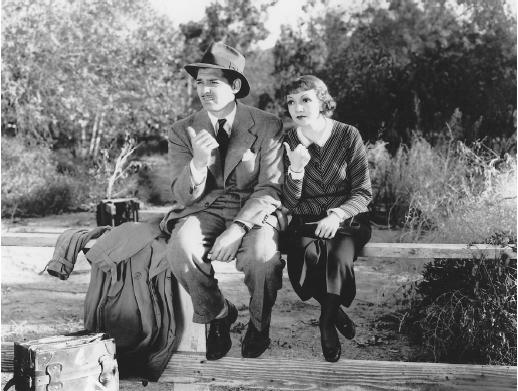
It Happened One Night The one that started it all was one of those happy, random moments that you can only describe as divine intervention. For some reason, I had been researching the greatest movies of all time and saw that this 1934 comedy had appeared on multiple lists. I remember being curious that a comedy--a romantic comedy, at that--was so widely beloved when, at that time, I perceived that dramas = quality. I decided that I had to see what all the fuss was about, so I went out and rented it. Having just been previously obsessed with old TV shows like I Love Lucy and The Jeffersons, watching old stuff wasn't anything unusual for me. Seeing It Happened One Night for the first time, however, truly changed my life. I adored the film so much so I watched it twice in two days. Having such a positive experience with Capra & company, I decided to start exploring other older films to see what they offered. The rest, as they say, is history.

Gone With the Wind When I first saw Gone With the Wind in junior high at my mother insistence, I had no clue that it would someday end up as my favorite film ever. I enjoyed the film but it was in no way life changing. Cut to a couple years later when I decide to start reading the novel on the spur of the moment. I start slowly but eventually I can't put the damn thing down. Then, one day during Spring Break, I'm tearing through the last couple hundred pages, crying like a baby the entire time even though I knew exactly what was coming. My love for the novel led me back to the movie and it instantly became my favorite. To this date, there are very few movies in my life I think I've seen more times than this nearly four-hour beast (Spice World and Aladdin quickly come to mind). If It Happened One Night ignited my passion for movies, Gone With the Wind cemented it.

Breathless I first saw Breathless in one of those undergraduate film survey courses that non-film major students bitch about because they are shocked we are studying 50 year old foreign films instead of Titanic and Adam Sandler's filmography. Breathless wasn't the first French New Wave film I had ever seen--I had seen and loved The 400 Blows twice by this point--but it was the one that ignited my passion for the movement. Watching the film was literally a revelatory moment before. Never before had I seen such an engaging film done in such an atypical shooting style. Breathless was the first film that opened my mind to the idea that films were much more than its story. A scant, nearly non-existent story could still make for a fun, fast, loose, cool film with the proper director setting the right mood through such simple things as non-linear editing and costuming.

Rear Window It took me many years to come to this conclusion, but Rear Window is easily the best film Alfred Hitchcock ever made. I never really got what this film was all about until my third viewing, which happened in my very first film course. Over the years, I literally saw it in every single film course I had in college and I loved it more and more every time. Even as I was getting slightly bored with my then-favorite Hitchcock Psycho, Rear Window offered something new and fascinating every time I saw it. The main reason I chose Rear Window is simply because this film proved to me that sometimes you need to watch a film multiple times to truly get what the filmmaker was attempting and that the best films are the ones that stand up to repeated viewings.

Kill Bill Volume 1 I spoke a little about my history with Kill Bill Volume 1 before and, looking back, I really see it as a turning point in my movie watching. Normally I would have been put off by Tarantino's gore fest, but I saw something unique and special in all the violence and gallons of blood. I'm still proud that, at 16, I was able to look beyond my own limited tastes and appreciate something out of the ordinary. It was a high point in the early stage of my cinephilia.

What about you? What were the films that turned you into a movie lover?

Friday, August 27, 2010

Academy Award-Winner Jean-Luc Godard

Up until a couple of days ago, I never thought I'd see the day when that phrase which litters so many prestige movies' trailers would be attached to notorious French director Jean-Luc Godard. Someone actually asked me if I ever thought he would get an honorary Oscar on my Formspring some months ago and I responded that there was no fucking way the same group who gave Slumdog Millionaire and Titanic their Best Picture award was going to honor the director whose idea of a "mainstream" film is Contempt and Detective. Not only is Godard not mainstream, he doesn't give a shit what the establishment thinks of him. Sounds like the perfect combination to never come within an inch of one. Granted, my guess for this honor is that it has something to do with his Breathless, quite possibly the most important film ever made after Citizen Kane, turning 50 this year (and you know they're cursing themselves that Truffaut isn't still alive because if they were going to honor the anniversary of the French New Wave, he'd be the safer director to go for). Either way, you have to hand it to the Academy for this bold, uncharacteristic move.

Now that The Master has been given this honor, a bigger question remains: will he even bother to show up and accept the award? Given the fact they can't even find the sneaky bastard to tell him the good news, my initial reaction is a big ole Whitney "Hell to the no!" But, then again, you never know. He could make an appearance just to say, "Fuck you" to all the Hollywood bigwigs in attendance. Who knows? If the people who ran this special ceremony where the honorary winners are honored were smart, they'd turn the whole thing into a "Will He or Won't He Show Up?" sort of affair. People can go around collecting bets and they'll be cameras around the building on constant "Godard Watch," hoping to catch a glimpse of him. And when whoever they get to present the award to him (my guess is someone like Martin Scorsese, but I LOVE my friend Joel's suggestion that Reese Witherspoon should present and give a speech about how Tout Va Bien changed her life), they should kill the lights for a minute to heighten the drama. When they come back on, either the stage will be empty or Jean-Luc will be standing there giving the finger to Clint Eastwood and whatever other Hollywood people are there. Sigh. Just when the regular Oscar telecast could have made something fun and fresh with the honorary Oscar, they had to go and make it its own non-televised ceremony.

All kidding aside, I'm fucking stoked that the greatest living director* is finally getting his due, even if its from a conservative, pedestrian awards group. From Nana's dance in Vivre sa vie to the agonizing traffic jam scene in Week End to Michel and Patricia spending an afternoon together in bed in Breathless, Godard has provided some of the most iconic moments of young moviewatching life. Thank you, Academy, whatever your reasons, for rewarding this true iconoclast.

*Not based on his current output, of which I've only seen Notre Musique and didn't understand a minute of it, but because of his pre-Tout Va Bien work.

Saturday, August 14, 2010

If You're Going to Have an Opinion, Please Don't Be Stupid

I'm all for critics having a differing opinion from my own; in fact, I relish it. Our differences are what makes the world go 'round, etc. But when you have an opinion and either can't defend it or your defense makes no bloody sense, that's when we have a problem. I recently read this article at the Guardian about the French New Wave that got my blood boiling. Look, I'm a self-admitted New Wave fanboy who has seen more of Godard and Truffaut's filmographies than any sane person double my age should, but I realize that the films aren't for everyone. However, when I'm reading a dissenting opinion, especially on a site as well known as the Guardian, I'd expect the author to offer a more substantial defense of their opinion instead of a hacky piece you would expect from a fifth-rate, attention-seeking blogger. Let's take a look at some passages from the article and dissect them, shall we?

"There are few images more enduringly cool than that of Jean-Paul Belmondo and Jean Seberg strolling nonchalantly down the Champs-Élysées in Jean-Luc Godard's À Bout de Souffle. Never mind that the scene did not actually appear in the film itself..."

...Except that it does. When the author was allegedly watching Breathless, were they actually paying attention or were they so distracted by how "awful" the whole experience was they had momentary amnesia?

"But here's the thing: I don't actually like the New Wave. There, I've said it. All that indecision and self-reflection – a sort of Twilight for grown-ups, only with paler stars and better fashion sense."

Now this is the point of no return for me. It's one thing to not like something, but it's another to compare the French New Wave movement with a vampire series aimed at teenagers for the dual purpose of appearing to be hip culturally speaking and gaining notoriety for making outlandish statements. If she could possibly defend this statement, I wouldn't have a problem with it. But the fact that the author says it, in the middle of a single paragraph for emphasis, without adding any support makes her lose credibility. If the indecision she is referring to is the Jean Seberg character's inability to decide whether or not to turn in her hoodlum boyfriend in Breathless, there is no logical way you can compare that to Bella trying to decide between Jacob and Edward in Twilight. Seberg's indecisiveness lasts 10 minutes, if that, of a 90 minute movie; Bella's is stretched out over two 2+ hour films. Yeah, real comparable. As for self-reflection, I won't deny that Truffaut and Godard, in particular, had an affinity towards characters who liked to talk a lot and mostly about themselves. I can see how this would be dull to non-fans, but these moments of reflection are rarely on the level of stupidity that Bella and Edward's endless prattling about their love for each other and their vampire problems are.

"I don't deny that Cahiers du Cinéma directors were geniuses of a sort, film critics who saw an overblown and worn-out Hollywood machine and decided to do something about it. When it came out in 1960, À Bout de Souffle stuck two fingers up to the studios still trying to pump money into soulless epics such as Cleopatra."

Wrong again. Unlike a lot of critics, the Cahiers critics were huge supporters of the American film industry and of certain directors like Hitchcock, Hawks and Ray that many important American critics completely ignored. No doubt they would have had problems with something as bloated as Cleopatra, but they saw mainstream French cinema as the big problem that needed fixing.

"The problem is the characters: Michel, with his obsession with Humphrey Bogart, Patricia with her pseudo-intellectualism. They always felt fatally underdeveloped, pastiches of their predecessors and less exciting than successors such as Bonnie and Clyde."


To complain that the characters of the New Wave films were underdeveloped is to completely miss the point of the movement. In Breathless, Godard wasn't particularly interested in exploring these characters; they were mere figures to not only hang his ideas about love, life and the movies on but also as a way to experiment with the stylization that eventually changed filmmaking. If the characters had been "developed," there would have been no room for Godard's manic jump cuts or to explore his obsession with the movies. He would have spent the entire time trying to get to the bottom of these characters. Also, did it ever occur to the author that maybe what we see in Breathless is the extent of the depth of these characters? Both Michel and Patricia are soulless creatures, children of Marx and Coca-Cola who have no depth beyond their silly lives. I'm not sure what the author was expecting, but I doubt Godard would have cared to show it in his movie. The author then goes on to cite the schoolteacher in The 400 Blows as another example of "underdeveloped" characters in New Wave movies. Wow, way to pick on a tertiary character and use it as a main point in your thesis. How about picking on one of the main characters in that film? Oops, wait, you can't, because, between Truffaut and the actors themselves, Antonie, his mother and father are all well-rounded and fully shaped characters.

"Both Godard and Truffaut were at one point on board to direct Bonnie and Clyde, a film that undeniably owes their influence a great deal. But had they done so, would Warren Beatty and Faye Dunaway have spent time debating their lovelife instead of shooting up Middle America? Arthur Penn...understood that American audiences could only take so much soul-searching. They were ready for action!"

Has the author seen Bonnie and Clyde recently? I actually watched it again for the first time in years the other day and I was actually surprised at how little of the film revolves around guns and bank robberies. Sure, the shootouts are probably the most famous sections of the film, but a good portion of the film is devoted to exploring Bonnie and Clyde as romantic folk heroes. They do spend a lot of time "debating their lovelife," whether it's in the form of Clyde's impotence or Bonnie's unhappiness being surrounded by Buck, Blanche and C.W. 24/7. It may not be as hardcore as in any French New Wave film, but it exists and I resent the fact that the author suggests that Bonnie and Clyde is nothing more than a shoot 'em up action film. Those last two lines in particular, ripe with irony and smugness, really annoy me.

"Truffaut is the master of self-indulgent film-making. In Les 400 Coups, Antoine, the neglected child, is undeniably cute. But how can his audience ever forget that this is Truffaut they are watching, that it is Truffaut again in Jules et Jim, that it is always Truffaut. Like Tim Burton today, Truffaut needed a good editor to tell him when his labour of love had become dull for everyone else."

Again, this is another matter of personal preference. Where one person sees "self-indulgent filmmaking," another (such as moi) sees Truffaut as a filmmaker with the self-awareness to find a little bit of himself in every single project and the ability to make these projects an extension of himself as a human. There's no doubt that Truffaut had an overriding theme that pervades nearly every single film of his. I call this thesis "Love at all costs," but he never explored this the same way twice. The Antoine Doinel films,
The Story of Adèle H., Mississippi Mermaid, The Bride Wore Black and Day for Night all revolve around this theme yet you'd be hard-pressed to find another commonality between them. And that last dig, comparing Truffaut to Tim Burton, was unnecessary and another example of the author making comparisons just to be controversial. Even Jules et Jim, which I'm admittedly not a big fan of, has a lot more merit as art than Burton's silly but empty versions of Charlie and the Chocolate Factory and Sweeney Todd.

I could probably go on and on ranting about this dumbass article, but I suppose I've made my point clear enough. Like I said in the beginning, I'm all for people have differing opinions from my own and I truly believe that not every film "classic" is for everyone. But when you're trying to write a thought piece on an entire film movement, it's best to use more than a couple examples to prove your point. Based on this article, my guess is the author has only seen Breathless, The 400 Blows and Jules et Jim and decided that that was enough to make an all-encompassing opinion about the movement. This would be the same as me writing something, positive or negative, about the German New Wave of the 70's having only seen a couple Fassbinder movies. Not everyone has to be in love with the French New Wave, but your negative opinions at least need be, I don't know, intelligent and supported.

Tuesday, May 18, 2010

Actor Devotionals: Jean-Pierre Léaud

The French New Wave was a film movement in early 1960’s France that broke all of the conventions of traditional movie making. Sick of prestigious studio films whose sole aim was to make money rather than present a distinct point of view, the New Wave filmmakers created films they wanted to see. Influenced by the Italian neo-realism movement, these directors worked outside the confines of a studio set, shooting right on the streets of Paris with natural lighting and handheld cameras. And Jean-Pierre Léaud was there right from the start: he was 14 when he played Antoine Doinel, the troubled and misguided youth in François Truffaut’s The 400 Blows, easily the greatest film about childhood ever made. The image of the New Wave, at least to the established guard, was that of a “youth gone wild”--both Truffaut and Godard, the movement’s two iconoclasts, were in their late 20’s/early 30’s when they began making films--and Léaud became a child of this New Wave. Not theatrically trained, he possessed a certain type of naturalism that worked magically with the sort of world the French New Wave sought to create. With no prior experience, he learned as he went, completely at the will of the director. And was he ever popular: between 1959 and 1973, he worked with cinematic giants such as Truffaut, Godard, Jacques Rivette, Jean Eustache, Pier Paolo Pasolini and Bernardo Bertolucci. Who besides Nicole Kidman can boast that wide of a variety of auteurs in such a short period?

One of the reasons Léaud was so popular with all of these directors was the fact that he was basically a blank canvas to be used in any way the director wanted. That’s not necessarily a slight against him; actually, it’s one of the things I find most fascinating about him as an actor. Armed with an array of mannerisms, both vocal (a tendency to shout at the camera like an impassioned politician) and physical (Kristen Stewart of Twilight fame obviously took notes on the way he runs his fingers through his hair in most of his films), that would limit most actors, Léaud was able to use them to his advantage. These mannerisms are present in nearly all of his films, yet he creates radically different characters that work in their respective film. With the director providing a strong enough context for Léaud and his characteristics, he was able to play both the happy-go-lucky youth in Stolen Kisses and the radical, blindingly head-strong Communist in La Chinoise without anyone questioning his acting ability.

His lack of pretense made him the perfect actor for an auterial-driven movement like the French New Wave (and the period of European filmmaking that followed). Films like Godard's experimental Le Gai Savoir and Pasolini's Porcile are not actor-driven pieces and only require a presence like Léaud's to deliver the director's true message. With Le Gai Savoir, he is literally nothing more than a figurehead as Godard's infamous "return to zero" abandons all notions of not only plot but sets, props and normal sound cues. The film is fascinating in parts, frustrating in others, but, outside of maybe a single one-liner, Léaud's performance is hardly the first thing you think of in hindsight. Porcile is a bit kinder to Léaud in terms of giving him a plot to work around, however, Pasolini's desire to shock is the real star of the film; the idea of a fresh-faced young kid like Léaud being a sexual deviant is explored far more than Léaud's character itself. How many actors of Léaud's generation, both American and European, can you imagine regularly allowing themselves to be reduced to mere decoration for a director's often times uncompromising and controversial vision? Very few, that's how many. Even Léaud's compatriots from the early days of the New Wave, like Belmondo, Karina and Seberg, had moved on to more mainstream pictures by this time.

The dichotomy between the Truffaut Léaud and the Godard Léaud is perhaps one of the most speculated about portions of his filmography. I once read somewhere that Léaud saw Truffaut as his father and Godard as his uncle and, judging by his appearances in each of their films, that analogy makes sense in more ways than one. Truffaut often cast him as an extension of himself, a hopeless romantic searching for the perfect love in an imperfect world. You can almost see his role for Léaud as a way of “teaching” him life lessons that a father should. In Antoine et Colette, Truffaut is teaching Léaud about the pain of unrequited love. The rejection may hurt, he seems to be saying, but there are plenty of fish in the sea. Bed and Board, the fourth installment of the Antoine Doinel series, seems to be showing him that relationships are never easy and comfortable grooves are never permanent. Godard, on the other hand, was the cool uncle showing Léaud things that his father wouldn’t find appropriate. Masculin féminin seems to be a fun, almost light springboard to the radical politics that invaded both their later collaborations and personal lives. Week End finds Léaud dressed up in Napoleonic garb reciting endless political nonsense in a field where no one can hear him, something Truffaut, no doubt, would have found too preposterous for him to do in one of his films.

Over the years, Léaud found ways to subtly portray each of these men who were so instrumental in shaping his career. As a child of the New Wave, he was often called upon in his later career to portray a figurehead, a relic even, of that era. His identity was so tied up with the New Wave, Léaud's presence alone could immediately bring the viewer into the era. In Bertolucci's 1972 film Last Tango in Paris, Léaud portrayed the boyfriend of Maria Schneider before she hooked up with Marlon Brando, a New Wave filmmaker embarking on a new project. If anything, his performance here seems to be a riff on the Godard persona. Léaud's character is completely pre-occupied with his film and everything in his life comes second to capturing his footage his precise way. Many of his conversations with Schneider end with Léaud launching into a long, rambling monologue about the nature of cinema and its connection to love and life, which sounds exactly like something Godard, using Léaud as his stand in, would have made him recite in one of their films together. In short, the character is a bit of a jerk who holds film and intellectualism above everything in his life--even personal relationships. The reason for this blunt characterization may lie in the fact that, as Truffaut hinted in his correspondence from the time, there might have a riff between the two over some personal matter.

When Léaud took on Truffaut in Olivier Assayas' Irma Vep, he was considerably kinder in his portrayal. The two of them always had a complicated, complex, indescribable relationship, one that extends beyond the typical director/muse relationship. After The 400 Blows, Truffaut, for all intents and purposes, became Léaud's father and they became mutually dependent on each other--both financially and emotionally. The two became so intertwined (at least in my mind) that, looking at pictures of them over the years, they almost seem to have merged into one indiscernible being, Persona style. When Truffaut died in 1983, Léaud was a complete wreck. Irma Vep seems to be his way of both working through his feelings about Truffaut's death while also honoring his memory in an interesting way. The director he plays here is a New Wave filmmaker who hasn't been successful, either financially or artistically, in a number of years. His new project is a remake of the 1915 silent serial Irma Vep and, as he has decided to shoot the film without sound, he is quite excited about the project's possibilities. As the film is shooting, however, people around him are not enthused about what has been shot; it looks like this project will add to his list of recent disappointments. The parallels to Truffaut's later career are unmistakable: after redefining cinema in the early 60's, he spent the rest of his career defending his work when he moved beyond that style of filmmaking. But the relationship between Léaud and Maggie Cheung, the actress chosen to portray Irma, is perhaps the most touching aspect of this homage to Truffaut. The two of them have only known each other for a short period of time, yet an almost unspeakable bond develops between them. There is no outpouring of emotion but, rather, a silent trust that can only come about between a director and his actor. When Léaud is carted off to a rest home after a mental breakdown, Cheung is genuinely saddened at the loss of this mentor.

What is remarkable about Léaud and his career is that even after fifty years in the business, we know relatively nothing about his personal life. There are no major biographies on him and even minor glimpses into his life have been prevented from going public (all of his correspondence with Truffaut was noticeably absent in a publication from a few years ago). This makes him all the more fascinating because the only way we can glean anything from him is through his performances. As a director’s lump of clay, however, to mold into whatever he needs for the film, we do not really get a sense of who Léaud is on screen either. Therefore, Jean-Pierre Léaud is one of the few movie stars who is completely impenetrable. Some may find this lack of connection off-putting, but I find this rarity to be something that deserves praise and contemplation. And in today’s digital age, will we ever find a star completely guarded as Jean-Pierre Léaud again?

Tuesday, January 26, 2010

Top Rentals of 2009

While, more or less, the films of 2009 have been generally disappointing, the best of my film rentals from previous years were everything 2009 wasn't: exciting, electric, and thought provoking. I find that the older and crankier I get, the harsher my grading becomes, so color me surprised that I ended up with seven A-worthy films (two of which came over the same weekend!) at the end of the year. Without further ado, here are, in a rough descending order, the 22 best film rentals I saw in 2009. If you haven't seen these films, I urge you to stop everything you are doing and check them out now. Why suffer through 2009's shit crop of bad films when you can enjoy these flicks?

A's

Masculin féminin
Jean-Luc Godard's wild mix of sexual politics, male/female relationships, war and 60's pop culture is both the precursor to his wacky later political films like Week End and Tout Va Bien and the main reason why I want to live in 60's France. Breathless may be Godard's masterpiece from a technical stand point, but Masculin féminin is simply my favorite from his massive filmography. Bonus points: Jean-Pierre Léaud's best non-Antoine Doinel performance.

I'll Cry Tomorrow
A clinically insane biopic of alcoholic Lillian Roth led by a ballsy, go-for-broke performance from Susan Hayward. I don't think Intervention has ever made alcoholism look this disgusting and degrading. My original thoughts here.

The Servant
The male precursor to Bergman's Persona. Young playboy James Fox hires my imaginary boyfriend Dirk Bogarde as his butler but, eventually, relationship dynamics change to the point that we are not sure who is the master and who is the slave anymore. The third act is so indescribably nutsy it has to be seen to be believed.

Ballad of a Soldier
Between this and The Cranes Are Flying, it appears that the go-to country for dreamy romantic melodramas in the late 50's was, of all places, the Soviet Union.

A Woman is a Woman

The random in-jokes, the way the characters play to the camera and the free-flow narrative all on display in Godard's New Wave homage to the musical exemplifies why I love his work.

Salò, or The 120 Days of Sodom
I still have nightmares about this film. If you think you've seen it all, try watching Salò without getting the urge to vomit. My original thoughts here.

Design for Living
The charming and dapper Gary Cooper and Fredric March match wits with the perpetually underrated Miriam Hopkins in this utterly hilarious (and quite risqué) Ernst Lubitsch comedy.

A-'s
Chungking Express
The first Wong Kar-wai film I've seen that I fell hook, line and sinker for. The two sequences could hardly be any more different, but they both beautifully portrayed the heartbreak and pain that goes with being in love.

Nanook of the North
The first big "documentary" (there's still quite a bit of debate about that) also happens to be one of the most entertaining and all-around engrossing films of the silent era. Who knew that Eskimoes lived such fascinating (and perilous) lives?

Two for the Road
If you get past the annoying British New Wave camera tracks, you will be surprised to discover a smart, mercilessly funny film chronicling the ups and downs of marriage. Audrey Hepburn has never been better, both as an an actress and as a style icon (oh that big hair and those sunglasses!) and Albert Finney was surprisingly bearable, even engaging in his best moments.

The King of Comedy
Minus The Departed, this is probably the most fun I've ever had with a Scorsese film. The satire is dead-on and timelier than ever in today's web-based celebrity culture.

Beaches
Given its camp reputation (and the fact it stars Bette Midler and directed by Gerry Marshall), I expected a shameless melodrama in the vein of The Notebook. Well color me surprised at how emotionally honest and unmanipulative Beaches is. When the tearjerking finale came about, it earned whatever tears it was able to generate.

Valentino
Another fantastic film about the perils of celebrity. Ken Russell's biopic of Rudolph Valentino may not be historically accurate, but it's one of the few films I've seen that truly captures the spirit and insanity of 1920's Hollywood.

Joshua

Sam Rockwell and Vera Farmiga star in this indie horror movie about the horror of a family breaking up amidst an upper-class surroundings. I was so entranced by this movie I kept it an extra day and watched it again; it did not disappoint on a second viewing. My original thoughts here.

The Marriage of Maria Braun
I really need to see more Fassbinder films because I'm two for three so far and the only one I wasn't crazy about (Querelle) at least had Brad Davis as a hunky homosexual sailor who gets fucked in the ass. Maria Braun boasts a fantastic lead performance from Hanna Schygulla as a headstrong woman trying to survive the aftermath of Nazi Germany.

Intruder in the Dust
A quiet, unassuming and surprisingly down-to-earth take on race relations in post-WWII America from, of all studios, MGM. For people appalled by Hollywood's treatment of blacks during the Studio Era, seek this one out to get the bitter taste out of your mouth.

2 Days in Paris
When talking about 2007's cinematic treats, why does no one talk about this gem of a romantic comedy starring and directed by Julie Delpy? Another underrated film I cannot recommend enough.

Kings and Queen
I wasn't as entranced by it as I was by A Christmas Tale, but Desplechin's film before that masterpiece ain't too shabby either. Emmanuelle Devos has such a tricky character to navigate (it's never quite clear whether she is the martyr or the villain of this piece) but she nails it without so much as breaking a sweat.

Best of the B+'s
Hiroshima, Mon Amour
I was expecting a pretentious "art" film that I would struggle to get through but, instead, ended up with a heartbreaking doomed romance that I couldn't get enough of.

Tokyo Story
I've seen a couple other Ozu films and was decidedly underwhelmed by them. Tokyo Story, on the other hand, completely captivated me. Setsuko Hara was an unexpected delight as the dutiful sister who is the only sibling who doesn't blatantly ignore her parents when they make the journey from their country home to the city to visit them.

Two English Girls
Truffaut's massively underrated tragedy about a Frenchman (Jean-Pierre Léaud) who spends years romantically involved with two sisters. Perpetually downbeat, Two English Girls is almost too heartbreaking to watch. Bonus points: the costumes are absolutely to die for. I seriously want JPL's wardrobe.

The Prime of Miss Jean Brodie

This film is worth it simply for the final scene, a verbal throwdown between Dame Maggie Smith's shady teacher and Pamela Franklin as her disgruntled former student wise to her manipulative ways. The inspirational teacher drama with a twist.

Sunday, January 10, 2010

Anna Karina is Dancing With Herself

This is, quite literally, one of the greatest things ever. Many thanks to Kameron for pointing this out to me.

Friday, November 13, 2009

Actor Devotionals: Jean-Pierre Léaud

A new series devoted to the actors and actresses who inspire me to continue watching and writing about the movies. Without these stars, cinema would be a little less bearable.

If you asked a group of cinephiles who their favorite French New Wave icon is, the amount of answers, unsurprisingly, would be wide and varied. Some of the “out there” members of this voting bloc might go with a quirky choice such as A Woman is a Woman star Jean-Claude Brialy. For the most part, however, a good majority of the votes would belong to Jean-Luc Godard’s muse (and wife for a brief period of time) Anna Karina and the sexy, rugged beacon of 60’s masculinity Jean-Paul Belmondo. As much as I love the above choices, for some time now, my heart has belonged to one New Wave icon alone: Jean-Pierre Léaud.

To the casual filmgoer, he may only be familiar as the troubled and misguided youth in Truffaut’s
The 400 Blows, easily the greatest film about childhood ever made, but he actually had, and continues to have, a long and successful career after that film. I would argue, in fact, that Léaud, not Belmondo or Karina, was the ultimate New Wave actor. Although not theatrically trained, he possessed a certain type of naturalism that worked magically with the sort of world the French New Wave (and other highly respected European auteurs) sought to create. And was he ever popular: between 1959 and 1973, he worked with cinematic giants such as François Truffaut, Godard, Jacques Rivette, Jean Eustache, Pier Paolo Pasolini and Bernardo Bertolucci. Who besides Nicole Kidman can boast that wide of a variety of auteurs in such a short period?


One of the reasons Léaud was so popular with all of these directors was the fact that he was basically a blank canvas to be used in any way the director wanted. That’s not necessarily a slight against him; actually, it’s one of the things I find most fascinating about him as an actor. Armed with an array of mannerisms, both vocal (a tendency to shout at the camera like an impassioned politician) and physical (you could really make a drinking game out of the number of times he runs his fingers through his hair in any given movie), that would limit most actors, Léaud was able to use them to his advantage. I still marvel at the way the same boy who appeared so down-trodden and hopeless in The 400 Blows grew up to become both the happy-go-lucky youth in Stolen Kisses and the radical, blindingly head-strong Communist in La Chinoise.


The dichotomy between the Truffuat Léaud and the Godard Léaud is perhaps one of the most speculated about portions of his filmography. I once read somewhere that Léaud saw Truffaut as his father and Godard as his uncle and, judging by his appearances in each of their films, that analogy makes sense in more ways than one. Truffaut often cast him as an extension of himself, a hopeless romantic searching for the perfect love in an imperfect world, and you can almost see his role for Léaud as a way of “teaching” him life lessons that a father should. In Antoine et Colette, it is all about the pain of unrequited love and, although this one may hurt, there are plenty of other fish in the sea. Bed and Board, the fourth installment of the Antoine Doinel series, seems to be showing him that relationships are never easy and comfortable grooves are never permanent. Godard, on the other hand, was the cool uncle showing Léaud things that his father wouldn’t find appropriate. Masculin féminin seems to be a fun, almost light springboard to the radical politics that invaded both their later collaborations and personal lives. Week End finds Léaud dressed up in Napoleonic garb reciting endless political nonsense in a field where no one can hear him, something Truffaut, no doubt, would have found too preposterous for him to do in one of his films.


What is remarkable about Léaud and his career is that even after fifty years in the business, we know relatively nothing about his personal life. There are no major biographies on him and even minor glimpses into his life have been prevented from going public (all of his correspondence with Truffaut was noticeably absent in a publication from a few years ago). This makes him all the more fascinating because the only way we can glean anything from him is through his performances. As a director’s lump of clay, however, to mold into whatever he needs for the film, we do not really get a sense of who Léaud is on screen either. Therefore, Jean-Pierre Léaud is one of the few movie stars who is completely impenetrable. Some may find this lack of connection off-putting, but I find this rarity to be something that deserves praise and contemplation. And in the age of digital media, will we ever find a star as completely guarded as Jean-Pierre Léaud again?

Saturday, August 1, 2009

Christophe Honoré and His Destructive Direction

I've tried to like Christophe Honoré's films--really, I have. His New Wave sensibilities seem to be right up this Truffaut and Godard fanboy's alley, but nothing I've seen of his has convinced me that he is in the same league with those heavy hitters. First was Ma Mère, that horribly pretentious, "sexually liberating" Bertolucci rip-off which is so mind-numbingly stupid and confusing it's still probably one of the ten worst films I've ever seen. Love Songs was considerably better (then again, anything short of a remake of The Bucket List would have been in comparison) but I wasn't as enamored with it as many other bloggers I read were. The musical scenes were nicely done and stuck with the low key nature of the film, but the way Honoré reduces the actors performance to a mere showcasing of random emotions, selected on whim to suit the needs of the scene rather than the development of the character drove me up a wall.


And now we come to Dans Paris. I saw a trailer for it awhile ago and thought it looked like fun, so I decided to give it a whirl, hoping in vein that this would be the movie where I finally "got" what people see in him. And...well, I'm still waiting for that movie. It's not that Dans Paris is an atrocity on the level of Ma Mè, it's rather that it failed to reach even the mediocre heights of Love Songs that most disappointed me. And, once again, it's in Honoré's direction where the film became a massive disappointment. He uses many of the techniques pioneered by the New Wave greats, but he fails to understand and utilize them appropriately. The beginning, for example, serves as the catalyst for the rest of the story and one of the major missteps in the film. Paul (Romain Duris) has moved away from his family in the city to live in the country with his girlfriend Alice (Alice Butaud), a relationship which has begun to dissolve rapidly. But instead of selecting a logical way to represent this, Honoré goes off the deep end and keeps cutting from the couple getting along, to them getting in an argument, to them having sex in the most random way possible. I honestly couldn't keep track of what was going on and, during the happy parts, Paul had gotten a new girlfriend. There's one scene in particular that is clearly an homage to the bedroom scene in Breathless where Belmondo and Seberg just kinda sit around and talk about random things for 20 minutes that simply doesn't work because of how erratic it all is. Paul and Anna go through all the highs and lows I mentioned earlier, with all the "boring" in-between parts edited out so that all we see are these highs and lows (angry, sad, happy, etc.). Why it works for Godard and not Honoré is that Godard was careful never to cut too much away. Belmondo and Seberg may have gone through the highs and lows, but he was careful to build up to them, not simply going for broke just to get it out of the way.

Can I just talk about how ridiculously stupid that ending is for a minute? I understand the point of Anna's character and how she's the only one Paul opens up to about his sister, but why on earth does she stay in the apartment all night? You would think that after being completely ditched by a guy you would be so humiliated that you would just leave right away and not stay the whole night, even after the guy comes home and would rather talk with this brother when he knows you're there. It may make sense in Honoré World, but, in reality, it's completely aggravating and plain dumb.

The fact that Honoré manages to get top-name French talent to appear in his films, including his muse Louis Garrel who has appeared in Honoré's last four films, continues to astound me. In the case of Dans Paris, the characters are strongly written and the actors are more than up to the challenge, but Honoré undermines them every step of the way. It's like someone offering a chocolate-lover an enormous piece of triple layer, triple chocolate cake and then informing you immediately afterwards that you are going to go on a three-mile run. It's simply not fair to offer something so tantalizing to any actor and then pull the rug out on them like that. I still have another Honoré film to see--La Belle Personne, simply waiting for English subtitles to appear online--so I'm sincerely hoping that that one doesn't descend to the idiocy that is Dans Paris (and Honoré learns to loosen up a bit). C

Tuesday, August 26, 2008

Jean-Pierre Léaud Has a Lesson to Teach


I'm on my way out to see Pineapple Express with my brother in a few minutes, so I thought I would share with you this video I found late last night on Youtube. It's a clip from Jean-Luc Godard's 1967 film La Chinoise and it features Jean-Pierre Léaud and his crazy-ass take on the Vietnam War with different pairs of sunglasses and a woman being attacked by toy airplanes. I've never seen the film (I really want to now) but this scene was so bête et très amusante that I just had to share it with you (and it doesn't hurt that Léaud is there either).

Monday, June 9, 2008

Rants on Stolen Kisses


I've never really understood Hollywood's (and the public's) obsession with sequels. Why would you want to see the same characters doing the same things over again in basically the same film? It especially irritates me when it's done for nothing other than financial gain (Do you honestly believe Spielberg and Lucas' motive to drag out Harrison Ford for Indy 4 was to fulfill some artistic calling?). They are rarely ever as good as the original, but yet everyone keeps falling for them time and time again, believing that this time it will be worth it.

Until recently, I was proud to say that I neither understood nor fell for this sequel craze. But, then I saw Stolen Kisses (François Truffaut, 1968) and it immediately made sense to me. Seeing Jean-Pierre Léaud's Antoine Doinel on the screen again, a few years after the first time I saw and fell in love with The 400 Blows, just made me so happy I can barely describe it. At that point, it almost didn't even matter if what followed was going to be the biggest pile of crap ever: Antoine and I were reunited and all was good in the world. Thankfully, with Truffaut in the director's chair, no film is ever going to be a complete waste of time.


Stolen Kisses
picks up with Antoine being dishonorably discharged from the Army for frequent AWOL's and a general poor attitude (Ah, some things never change). Antoine lands a job as a night clerk in a hotel, but is quickly fired. Eventually, he finds himself working at a detective's agency and this is where the bulk of Stolen Kisses takes place.

Léaud's Antoine is still the born loser that he was in The 400 Blows. Everything he touches seems to fall apart sooner or later. Whether it's his night clerk position, wrapping a shoe box to try to pass off as an employee at a shoe store or trying to romance an older woman (Delphine Seyrig), Antoine can't seem to catch a break. More than anything, Truffaut and Léaud pass Antoine as a sort of Chaplin-esque figure longing for romance but caught in the harshness of the cold, cruel world. There are also many visual throwbacks to Chaplin from the baggy pants/tight coat combination of Antoine's army uniform, to his many goofy expressions when caught in compromising situations (like the one at the top of this post when he has caught a woman cheating on her husband) to his one-legged stop right in front of the hotel where the prostitutes hang out right after he is discharged.


If anything has changed between The 400 Blows and Stolen Kisses, it's the overall tone that has done a complete 180. The 400 Blows was an almost straight drama (with some amusing asides) about juvenile delinquency in which you could feel Truffaut's own rough childhood coming in to play in every scene. Stolen Kisses, on the other hand, is a light and playful comedy as breezy as an early Buster Keaton short. One is not necessarily better than the other; they both suit their movies' needs perfectly. Stolen Kisses isn't interested in following a former delinquent trying to reform or get his life together. Truffaut instead wants to focus on a young, idealistic man searching for love while stumbling through whatever life throws his way.


Stolen Kisses
is the rare sequel that takes its original and completely changes it around to make a completely different movie. It's the type of work we should be praising more in an era when Hollywood is greenlighting sequels to the most ridiculous movies (Transformers 2? Didn't we get enough robots destroying things the first time?) and Truffaut is the director we should be looking at to guide us in how to make a proper sequel. A-

Tuesday, February 13, 2007

What a Day!


Today was a pretty interesting day in the world of arts for me- and it was all spectacular. I first got to see Jean-Luc Godard's 1960 film Breathless and was really impressed. Like a great Altman film, there's not much story going on, but what's on the screen is magic. I couldn't take my eyes off of the beautiful, budding romance between car thief Michel (Jean-Paul Belmondo) and American reporter-wannabe Patricia (Jean Seberg). Even if Belmondo wasn't so good looking (more about that in an upcoming post, I'm sure) I think I would still want to stare at these two. Unfortunately for me, I must have been a little too tired this afternoon and dozed off for a couple of minutes before the finale, so this is definitely one I'm going to have to see again (and I'm not complaining!).
Next, I rented Sofia Coppola's Marie Antoinette and watched that in the afternoon. Now, I'm going to admit that I am a fan of the Norma Shearer 1938 version (and even believe Norma gives one of her greatest performances in it), but Coppola's version offers up a whole different take on it. The costumes and sets were fan-freaking-tastic and nearly took my breath away on several occasions (the scene where Marie first arrives at the palace springs to mind). And Kirsten Dunst is the perfect choice for this fabulous Queen. I now want to live like Marie when I grow up (and eat all of that great food!).
Finally, I saw a production of the musical version of John Waters' Hairspray. I have yet to see this movie, but I'm a huge fan of John Waters' other trashy films (I'd defend the greatness of Cecil B. Demented until my death and Divine was fabulously over-the-top in Female Trouble) so I figured I would enjoy this- and boy did I ever. I haven't heard this hilarious and memorable lyrics in a long time (I'm still singing "You Can't Stop the Beat" two hours after the show) and most of the performances/characters made my day. I now can not wait until the film version with Michelle Pfieffer, John Travolta and Queen Latifah.